
Punta Alta Engineering Study – Camanchaca
The first step was to analyze information included in the oceanographic studies provided by the client, taking the following points into account:
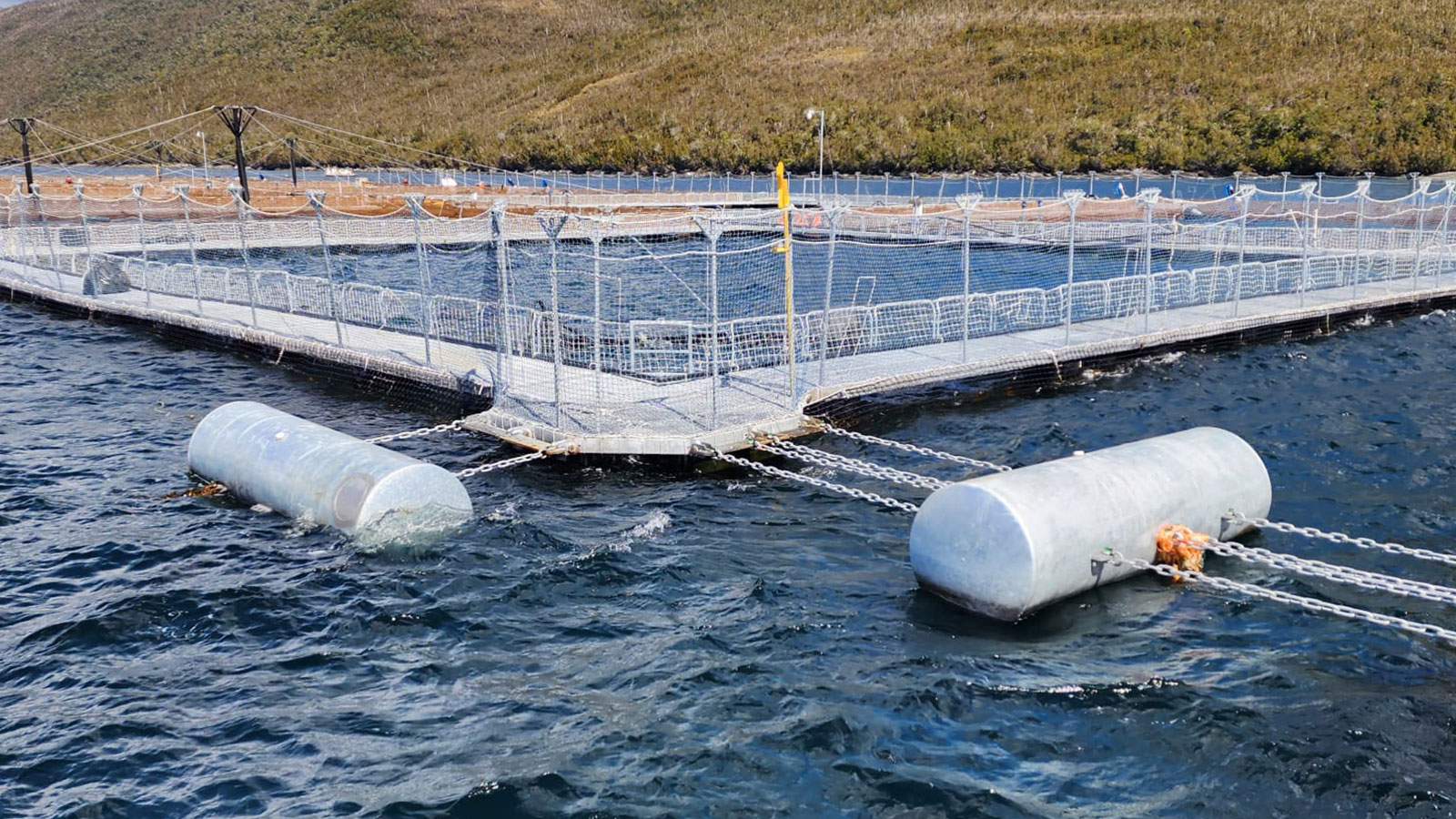
Subsequently, the following plans and technical specifications were available: aisles and cage configurations, fish nets, sea lion and bird barriers, sea lion netting, pontoons, and other equipment supporting the center’s operations.
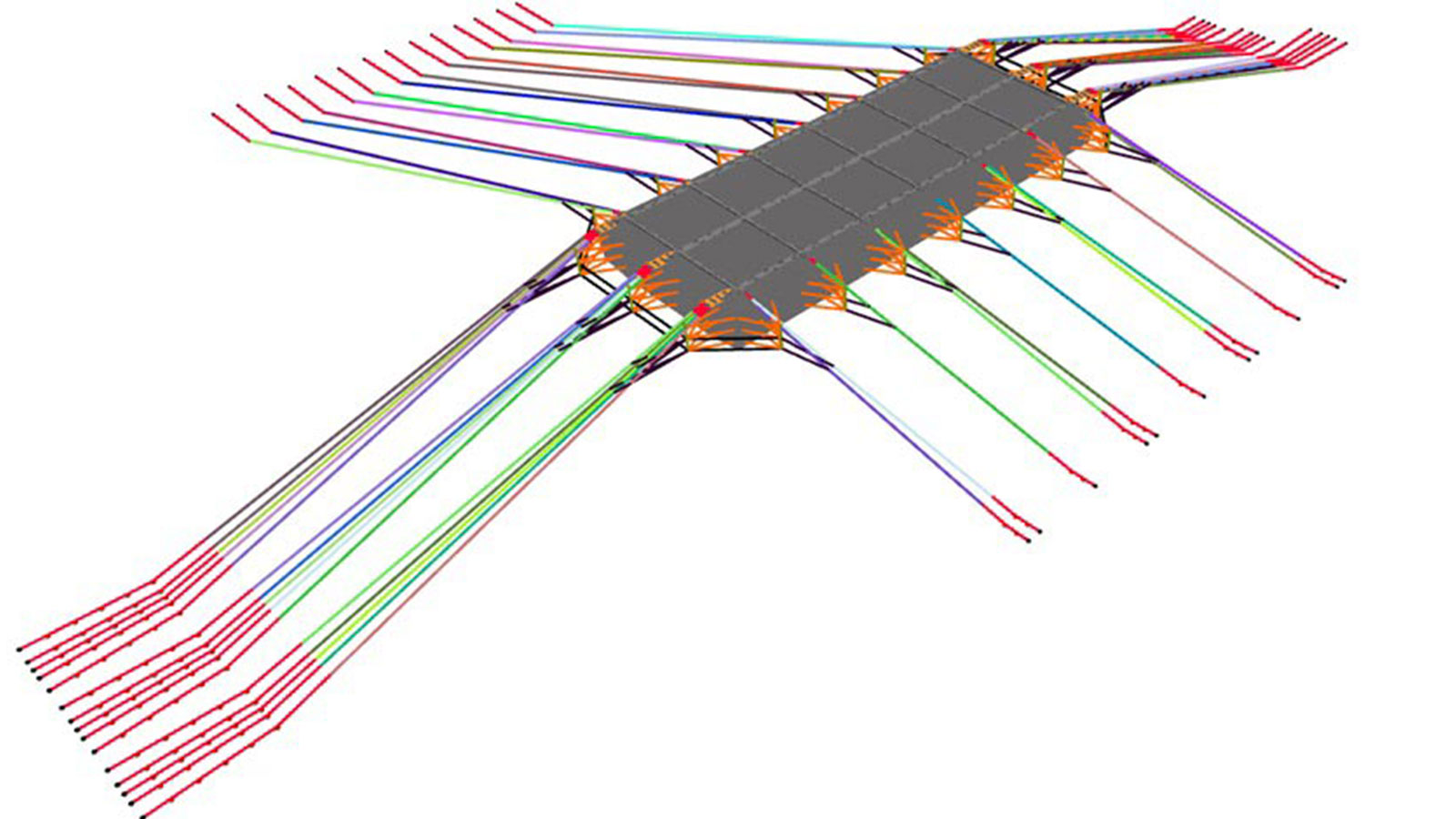
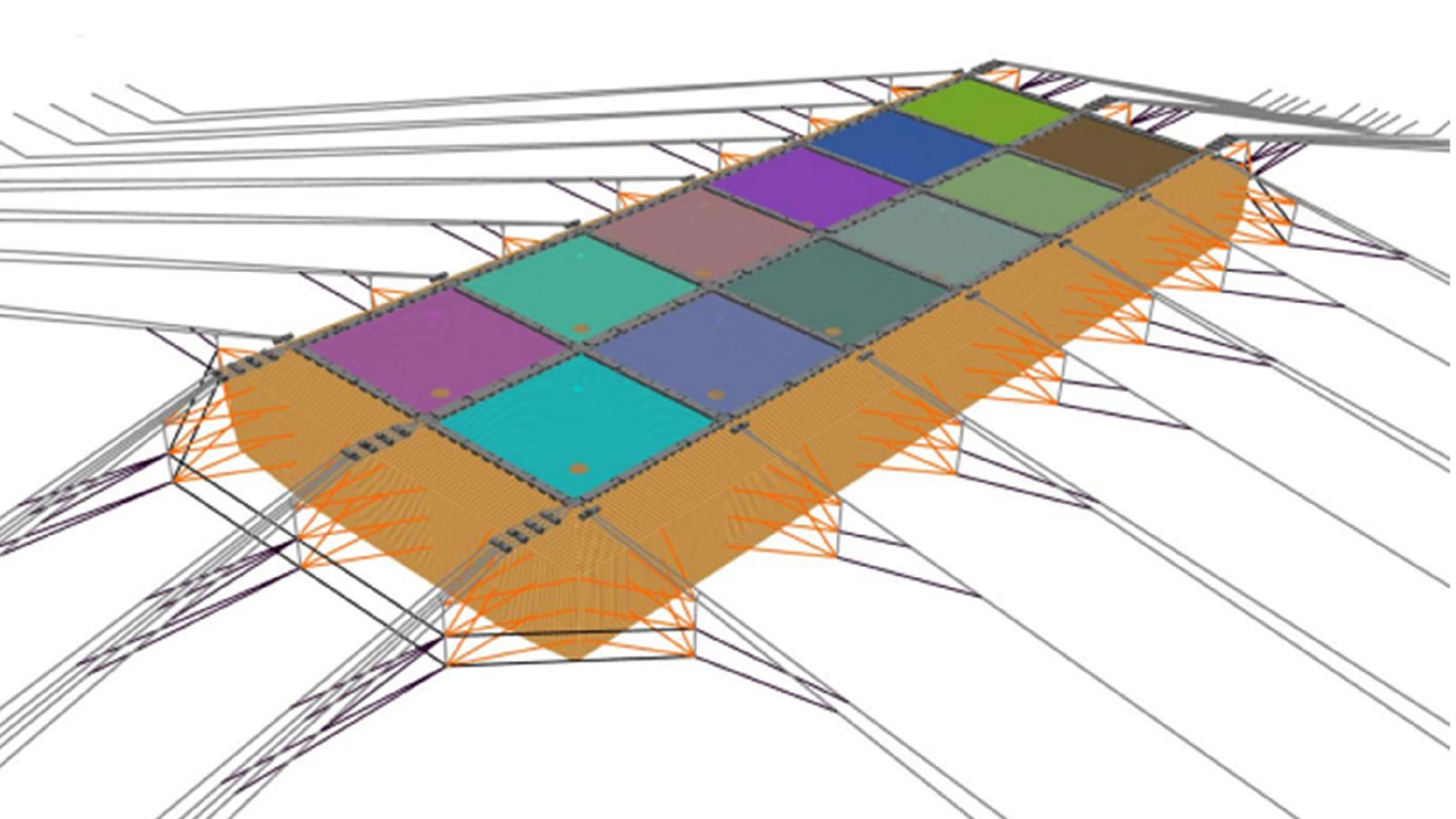
The information was then used to model each of the structures in detail using Aquasim, taking into account their geometry and relevant characteristics, and including the definition of eight combinations of forcing conditions corresponding to the eight main directional ranges.
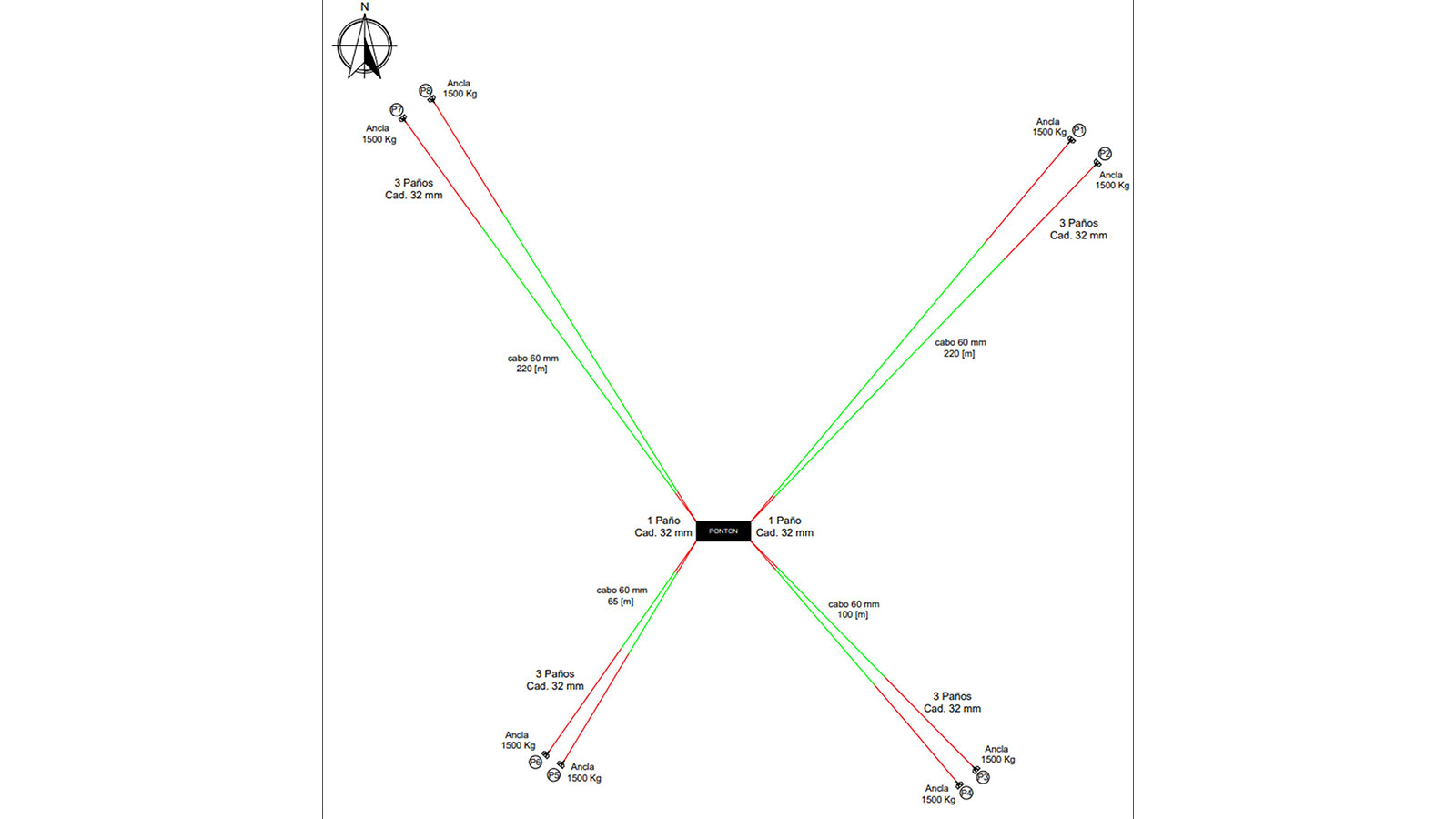
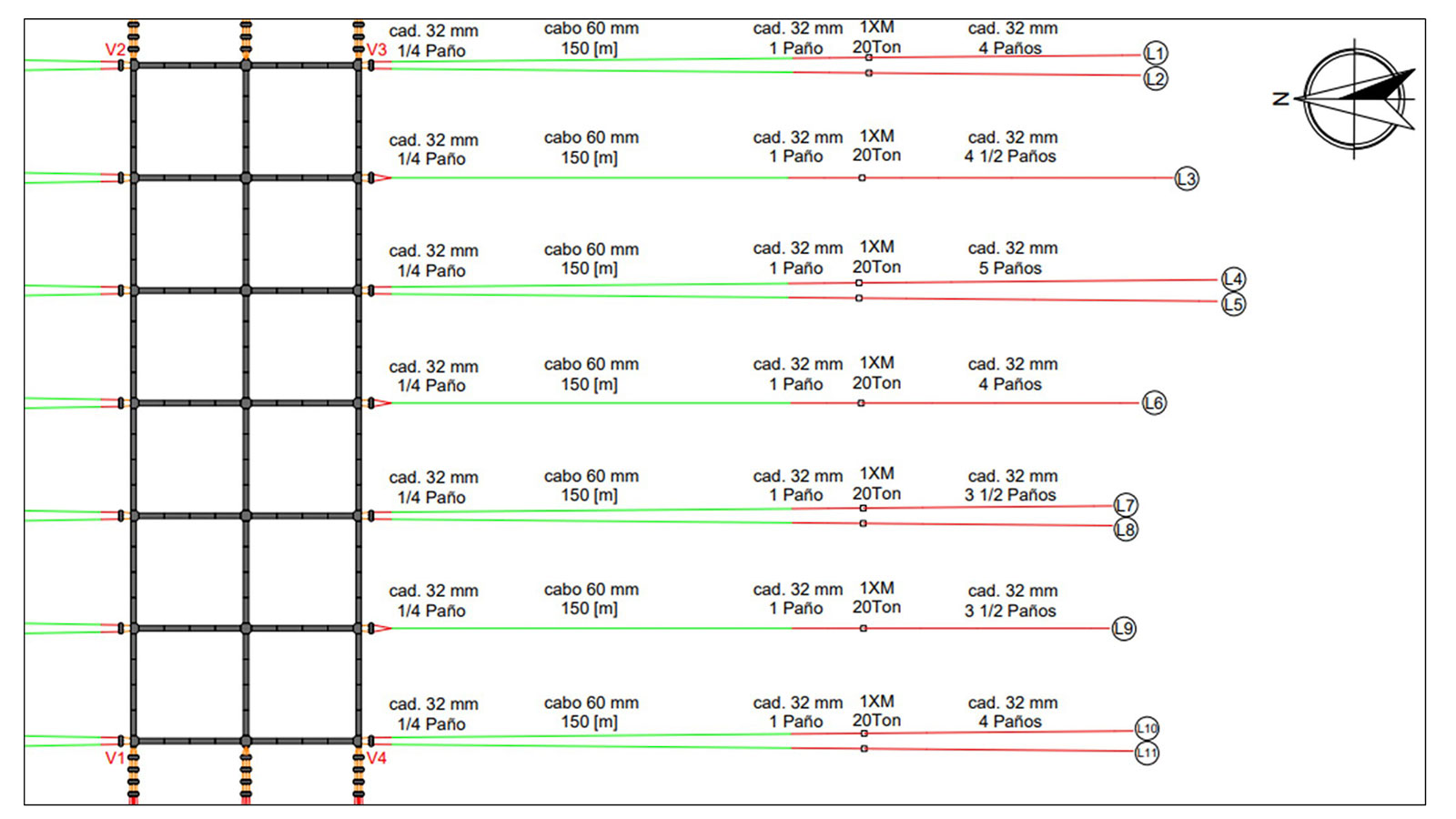
The analyses performed on the model yield maximum stress values for each of the mooring lines included, which then guide the design process in accordance with Res Ex 1821 and Res Ex 3362 to determine the materials required to design a mooring system robust enough to ensure the safety of the facilities.
Finally, once all elements of the mooring system have been defined, the drawings and lists of materials are generated, which will be used to guide the installation process of the facility.
As part of the additional analysis for the design of a mooring system capable of withstanding the forcing conditions described above, a study of the deformation of fish and sea lion nets was requested in order to estimate the extent to which the volume available to the fish is reduced. To this end, the same model that already accounted for the actual dimensions and characteristics of the nets to be deployed was subjected to various combinations of operating conditions. This yielded detailed results regarding changes in the shape of each individual cage along the module, as well as the distances reached by the dividers and sea lion barriers at the end of the module.
The final study included in this project consisted of examining how a fish stocking or harvesting vessel might affect the passageways or the mooring system. For this case, a model of the Wellboat “Orca YKA” berthed in different sectors of the module was included in the analyses, simulating the positions it assumes during stocking or harvesting operations.